
Managing New York Real Estate Paperwork: Co-op Board Requirements and Closing Documents
A clear, step-by-step guide to the board package, the documents buyers commonly need, and the paperwork that carries a New York co-op sale to closing.
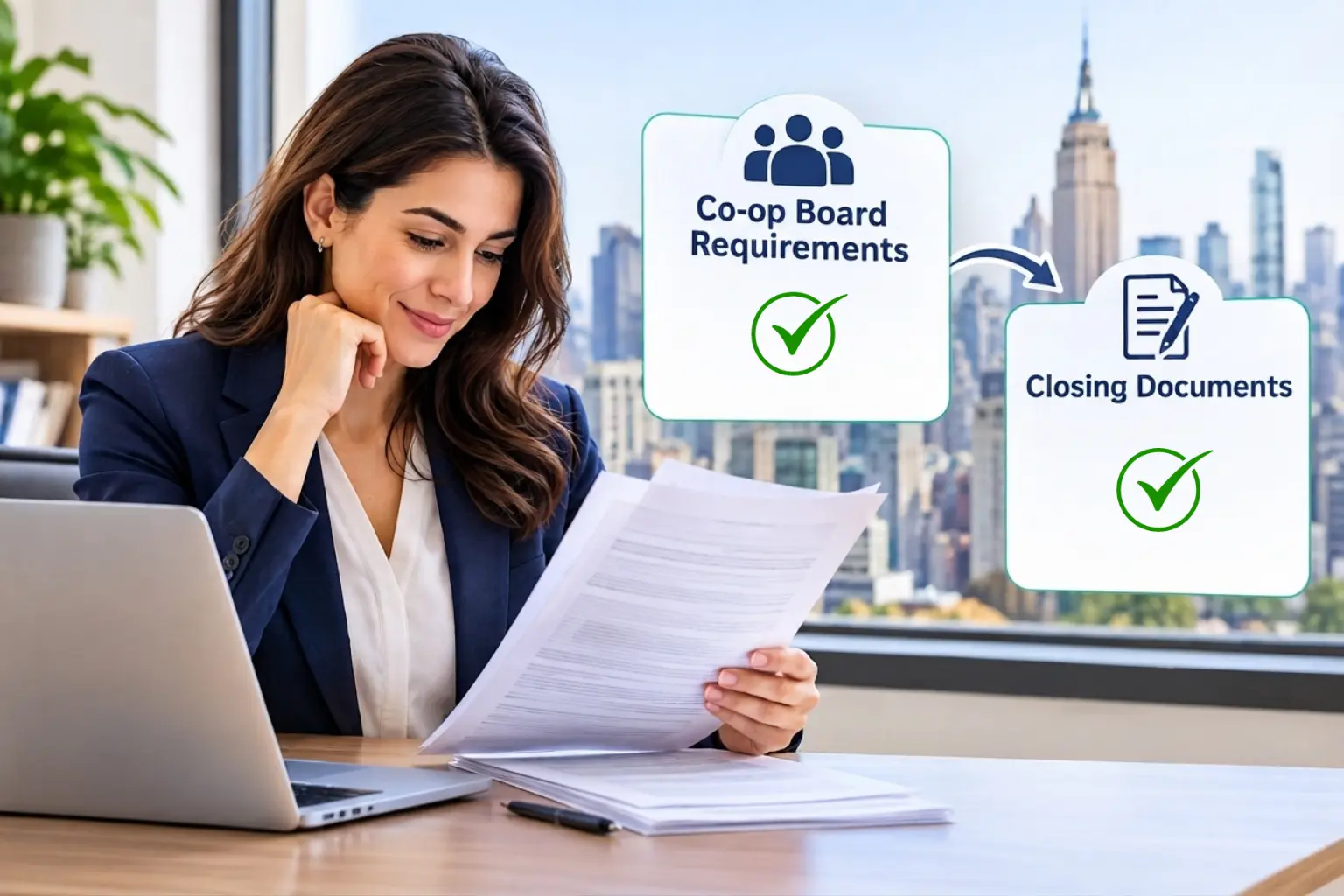
New York real estate transactions can involve different documentation and approval requirements depending on the property type and location. This guide focuses on New York City co-op purchases, explaining the board application process, commonly requested buyer documents, and the paperwork needed to complete the transfer.
A New York City co-op buyer usually submits a building-specific board application before closing, then completes a separate set of transfer and lender documents to receive the co-op shares and proprietary lease. The building’s managing agent supplies the controlling checklist; there is no single package that fits every co-op.
Buying into a New York cooperative can feel like two transactions happening at once: the board evaluates your application, while your attorney, lender, seller, and managing agent prepare the transfer. Keeping those document tracks separate and confirming the building’s exact requirements early can help prevent avoidable back-and-forth.
What Is a Co-op Board Package?
In a co-op, a purchaser generally buys shares in the corporation that owns the building and receives a proprietary lease for the apartment, rather than receiving a condominium-style deed to the unit. That ownership structure is why the board and managing agent request an application file before approving a transfer.
A board package is the building’s application and supporting documentation. It typically helps the board review the proposed purchaser’s finances, references, intended occupancy, and compliance with building rules. Requirements vary by building and can change, so use the current packet from the managing agent, not an old checklist from another apartment, as your source of truth.
For background on evaluating a cooperative purchase and its offering plan, see the New York Attorney General’s co-op and condo buyer guidance.
NYC Co-op Board Requirements: A Buyer’s Document Checklist
The list below covers common categories, not a universal requirement. The building’s current application controls the forms, number of copies, signatures, fees, submission method, and any additional items. A typical package may ask for:
- Completed application forms: buyer and occupant information, acknowledgements, authorizations, and any building-specific forms.
- Signed contract of sale: the fully executed contract and required riders or disclosures specified by the building.
- Personal financial statement: assets, liabilities, income, and recurring obligations, often on the building’s own form.
- Financial supporting records: recent bank and investment statements, proof of funds, and documentation for gifts or other large deposits when requested.
- Income and tax records: recent pay statements, employment verification, and tax returns for the years requested in the packet.
- Loan paperwork: pre-approval or commitment and lender details if the purchase is financed; cash buyers may need proof of funds instead.
- Personal, professional, or landlord references: the building may specify who should write them, how many are needed, and whether there are required forms.
- Identity and occupancy details: identification, proposed occupants, and other information required by the application.
Some buildings also request a purchaser résumé, interview materials, or additional financial explanations. Ask whether the package must be delivered as a single PDF, through a portal, or as signed originals.
Before sharing sensitive financial or identity information, confirm the approved delivery method with the managing agent and follow the building’s instructions for safeguarding it.
Make the Financial Statement Match Its Backup
Reconcile each reported account and liability to the supporting documents. Explain unusual deposits or transfers if requested, check that statement periods are complete, and make sure the down payment source is documented. If the figures change between submission and closing, ask your attorney or managing agent whether an updated statement is needed.
New York City Co-op Application Timelines in 2026
New York City Local Law 58 of 2026 introduced new requirements for covered cooperative corporations reviewing purchase applications. The law took effect on July 28, 2026, and applies to covered co-ops with 10 or more units, subject to statutory exceptions. It requires covered cooperatives to maintain written application and transfer requirements and provide them upon request. Read the law.
Under the law, a covered co-op generally must acknowledge receipt of an application within 15 calendar days by email and registered mail. The acknowledgement must state whether the application is complete or identify the items needed to complete it. If the co-op does not provide the required acknowledgement within that period, the application is generally treated as complete for purposes of the statutory timeline.
Once an application is complete or deemed complete, the co-op generally has 45 calendar days to notify the purchaser of its decision. The law allows a limited extension and provides for certain timing adjustments, including an announced summer recess. Missing a deadline does not mean the purchaser is automatically approved. See the legal overview of Local Law 58.
Buyers should still obtain the current application and transfer requirements from the managing agent and confirm how the law applies to their particular building and transaction.
What Documents Are Needed to Close a New York Co-op?
Board approval is an important milestone, but it is not the closing itself. The transfer is usually documented through the co-op corporation’s share and lease paperwork, together with seller, buyer, and lender documents. Your attorney and the managing agent coordinate the final list for the specific apartment.
- Transfer instruments: the stock certificate and stock power, plus the proprietary lease assignment or related transfer documents required by the corporation. The precise forms depend on the building and how its shares are held.
- Closing statement and transfer forms: final figures, fees, adjustments, and the corporation’s transfer or administrative forms.
- Lender documents, if financing: executed loan papers and any recognition agreement or lender forms required by the co-op and lender.
- Seller payoff and release items: documents needed to address an existing loan against the shares and complete the transfer.
- Searches and clearances: the attorneys coordinate the applicable co-op lien, judgment, or UCC searches and resolve any issues that affect transfer.
- Funds for closing: verified instructions for the required certified funds or approved wire, along with identification and any original documents requested.
- Tax paperwork: applicable state and city transfer-tax forms, exemptions, or nonresident-related filings as the transaction requires.
New York’s Tax Department explains that real estate transfer tax rules also apply to certain cooperative-share transfers; who pays and which filings apply depend on the transaction and contract. Have your attorney confirm the tax treatment and current forms rather than assuming a co-op transfer follows the same paperwork as a condo deed. See the New York State transfer tax guidance and its current transfer-tax forms.
When to Gather Each Document
- Before signing: review the offering plan, building rules, financial expectations, and any available building requirements with your real-estate professionals. The Attorney General advises buyers to understand the property and review the offering-plan information before purchasing a co-op or condo.
- After contract execution: get the current board package and deadlines from the managing agent; request references and employer letters early because other people need time to prepare them.
- While the board reviews the file: answer requests through the designated contact, keep updated financial records available, and coordinate lender steps with your attorney.
- After approval and before closing: confirm the stock and lease transfer paperwork, lender requirements, searches, tax forms, final closing figures, and the method and timing for delivering funds.
- At closing: sign and exchange the documents on the final checklist, verify the transfer is complete through the attorneys and managing agent, and confirm how keys and building access are delivered.
Common Paperwork Mistakes That Slow a Co-op Purchase
- Using a checklist from a different building or an outdated application packet.
- Leaving fields blank, missing initials, or submitting unsigned forms.
- Sending only selected pages of a statement when the building asked for every page.
- Reporting assets, liabilities, or income that do not reconcile with supporting records.
- Waiting until the last minute to request references, lender documents, or building forms.
- Assuming board approval, lender clearance, and closing coordination are the same step.
- Sending sensitive records before confirming the managing agent’s secure submission instructions.
A simple way to stay organized is to make one checklist from the current building packet, assign an owner and status to each item, and keep board-application documents separate from closing-day originals. When a requirement is unclear, get the answer in writing from the managing agent or your attorney before submitting.
Real estate professionals can also use transaction management software to organize document-related tasks, assign responsibilities, and track important deadlines throughout the transaction.
Final Pre-Submission Checklist
Before submitting the board package, check that:
- You have the current application and building checklist.
- Every required field is completed.
- Financial figures match the supporting documents.
- All requested statement pages and supporting records are included.
- Required signatures and initials are in place.
- References and lender documents are ready, where applicable.
- The submission method and deadline are confirmed with the managing agent.
- You have kept copies of the submitted documents for reference.
Keep Your New York Co-op Transaction on Track
Managing New York real estate paperwork requires careful preparation, accurate documentation, and coordination between buyers, attorneys, lenders, and managing agents. From completing the co-op board package to preparing the final closing documents, each step plays an important role in moving the transaction forward.
Start gathering documents early, follow the building’s current requirements, and keep track of outstanding items and important deadlines. A well-organized process can help reduce paperwork-related delays and make a New York co-op purchase easier to manage.
Looking to keep your real estate transactions organized? Trackxi helps real estate professionals manage tasks, assign responsibilities, and track important deadlines in one place.
Explore Trackxi to simplify transaction coordination.
Frequently Asked Questions About New York Real Estate Paperwork
No. Each co-op may set its own forms and submission requirements. Request the current buyer packet from that building’s managing agent and follow it.
No. The board package supports the application for approval. Closing documents complete the share and proprietary-lease transfer, lender transaction, final accounting, and any required filings.
Generally, a co-op purchase transfers shares in the cooperative corporation and rights under a proprietary lease, rather than a deed to an individually owned condominium unit. Ask your attorney to explain the documents for your specific transaction.
Start as soon as you have the current building checklist and coordinate the timeline with your attorney, lender, and managing agent. Reference letters and lender materials often depend on other people or institutions, so they should not be left to the final days.
Costs and tax responsibilities depend on the contract, financing, building, price, and buyer or seller circumstances. Ask your attorney for a transaction-specific estimate and confirmation of current filings.
