
How to Keep Buyers, Sellers, and Vendors Aligned During a Real Estate Transaction
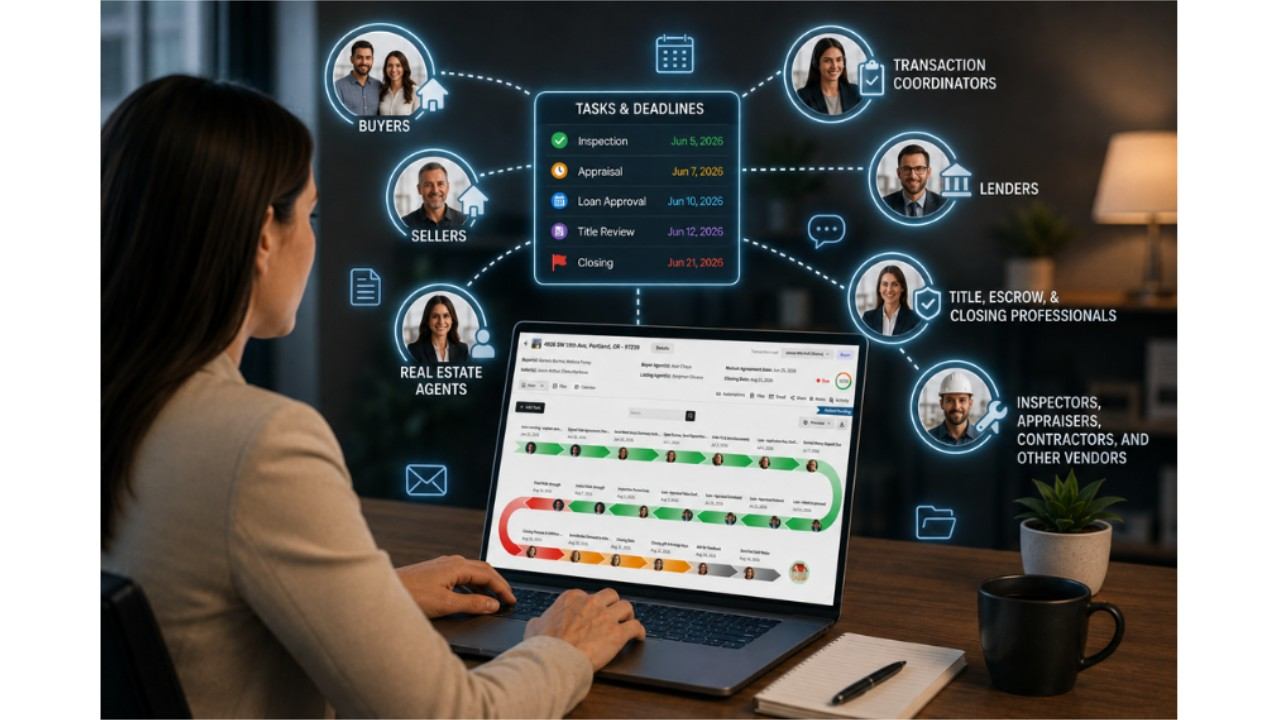
A real estate transaction involves much more than a buyer, a seller, and their agents. Once a purchase agreement is signed, lenders, inspectors, appraisers, title or escrow professionals, contractors, transaction coordinators, and other vendors may all play a role in moving the transaction toward closing.
With so many people involved, keeping everyone informed and on the same page can become difficult. A missed update can leave someone waiting for information. An overlooked deadline can delay the next step. A missing document or unclear responsibility can lead to unnecessary follow-ups and confusion.
Effective real estate transaction communication is about more than sending emails and making phone calls. It requires a structured process for managing tasks, responsibilities, deadlines, documents, updates, and transaction milestones so the right people know what needs to happen and when.
In this guide, you’ll learn practical ways to improve real estate transaction coordination, reduce communication gaps, keep buyers, sellers, and vendors informed, and create a more organized workflow from contract to closing.
Why Communication Breakdowns Cause Real Estate Transaction Delays

There are numerous tasks that must take place in the proper sequence and time to ensure that real estate transactions are successful. There are a number of items that must be done prior to closing, including scheduling inspections, obtaining financing, completing appraisals, gathering documents for closing, signing documents and completing title or escrow requirements.
If multiple individuals are involved in various aspects of the transaction, communication can easily break down. A buyer may be looking for an inspection update, a lender may be looking for a document, or a transaction coordinator may be chasing up a deadline that another party was not aware of.
The problem is that information can become fragmented across:
- Email threads
- Text messages
- Spreadsheets
- Shared folders
- Calendars
- CRM notes
- Individual task lists
- Phone calls
- Separate transaction platforms
When information is scattered, it becomes harder to answer simple questions:
- What needs to happen next?
- Who is responsible?
- When is it due?
- Has the task been completed?
- Is a document still missing?
- Has the deadline changed?
- Is anything putting the closing timeline at risk?
These gaps could cause endless manual follow-up, duplication of efforts, missed deadlines, delayed closing, and confusion between the parties involved.
It’s more than just a communication problem. It’s a transaction visibility, ownership clarity and process issue.
Who Needs to Stay Aligned During a Real Estate Transaction?

A real estate transaction involves many different people. Each person has work, deadlines to meet, and information they need to understand. Not everyone needs to know every single detail, but as long as they are involved in the matter, they must understand three things: what stage the transaction is currently at, what tasks they need to complete on their end, and what needs to be done next to move the process forward.
Buyers
Buyers need to receive all kinds of updates in a timely manner, including home inspections, loan processing, transaction documents, various deadlines, and arrangements for the next steps. If communication is inadequate and unclear, they will keep calling to ask about the progress and send messages to follow up every few days, which annoys everyone and leaves everyone feeling uncertain.
Sellers
Sellers need to know the important milestones of the transaction, home inspection results, repair requests raised by the buyer, various transaction documents, and closing preparations. Clear updates help them respond to decisions and requests without unnecessary delays.
Real Estate Agents
Agents should have up-to-date details on their clients’ deals, such as due dates, pending tasks, and significant changes. If not handled systematically they can waste too much time in looking for information or answering ‘status’ questions.
Transaction Coordinators
Transaction coordinators typically handle administrative tasks from the listing contract to the closing of a deal. They may be responsible for tracking deadlines, documents, inspections, appraisals, signatures, and follow-ups depending on the brokerage and the transaction. Having a system in place helps keep everything running smoothly.
Lenders
Lenders need required documents and information to process the loan and meet applicable financing milestones. Delayed responses or missing information can hold up financing and affect later stages of the transaction.
Title, Escrow, and Closing Professionals
Depending on the transaction and jurisdiction, these professionals may need documents, signatures, and other requirements completed before closing. Keeping outstanding items clear helps the transaction team address them before they become last-minute issues.
Inspectors, Appraisers, Contractors, and Other Vendors
Vendors may be responsible for appointments, reports, repairs, or other deliverables. Their tasks need to fit into the broader transaction timeline so that one missed appointment or deliverable does not affect the next step.
Each person may be responsible for only one part of the transaction, but their work can affect the larger transaction timeline.
What Information Should Be Shared During a Real Estate Transaction?

Not everyone needs access to every detail of a transaction. However, each person involved should have the information they need to complete their responsibilities and meet applicable deadlines.
Important information may include:
- Contract dates
- Contingency deadlines
- Inspection dates
- Appraisal milestones
- Financing milestones
- Required documents
- Missing signatures
- Repair-related tasks
- Title or escrow updates
- Closing date
- Outstanding tasks
- Assigned responsibilities
- Changes to the transaction timeline
- Status Updates
Keeping this information organized and linked helps the transaction team see what has been completed, what remains outstanding, who is responsible, and what still needs attention.
A systemized process of transaction management can gather a lot of these facts together rather than dumping them in emails, spreadsheets, calendars, folders, and various systems.
8 Ways to Keep Buyers, Sellers, and Vendors Aligned in a Transaction

Regular communication isn’t enough to align buyers, sellers, agents, transaction coordinators, and vendors; processes with defined structures enable team members to know their tasks, keep track of deadlines, organize documents, and ensure all team members are up to date on their tasks and identify outstanding work before it affects the transaction.
1. Assign Clear Responsibilities for Every Transaction Task
Alignment starts with clearly defining who is responsible for each task.
After a contract is executed, identify the people involved and clarify the responsibilities that apply to each party. This reduces the chance that two people assume the other person is handling something.
For example, instead of simply creating a task called “Schedule inspection,” identify:
Task: Schedule inspection
Responsible party: Buyer/agent
Start date: August 18, 2026
Due date: August 20, 2026
Status: Pending
This same principle can be applied to all tasks of the transaction such as collecting the documents, coordinating the appraisal, instruction for the repair, coordinating the title, the finance activities, and preparing for closing.
Once each task has a designated owner, everyone knows who is expected to do the task and who to reach out to for the status.
2. Create One Source of Truth
One of the biggest challenges in transaction management is fragmented information.
A transaction may have information stored across email inboxes, shared drives, spreadsheets, text messages, paper documents, CRM notes, calendars and separate task lists.
A centralized transaction workspace can bring important information together, including:
- Transaction details
- Documents
- Tasks
- Deadlines
- Contacts
- Milestones
- Status updates
- Notes
The goal is simple: everyone who needs transaction information should know where to find the most current details.
When the same current information is available to the appropriate people, buyers, sellers, agents, and vendors are less likely to work from outdated or conflicting details.
3. Track Real Estate Transaction Deadlines
Deadlines are one of the most important parts of transaction coordination.
Depending on the transaction, teams may need to monitor inspection deadlines, financing milestones, appraisal dates, title-related requirements, document deadlines, and the closing date.
When the purchase agreement is signed, instead of looking back in memory or in several calendars, make a timeline of the transactions.
At minimum, track:
- Task or milestone
- Due date
- Responsible person
- Current status
- Related documents
- Notes or updates
Automated reminders can then alert the responsible person about upcoming deadlines and give the transaction coordinator time to follow up before an item becomes urgent. Reminder timing can be adjusted based on the task and the transaction’s requirements.
For example:
Inspection deadline → Reminder before due date → Responsible party takes action → Status updated
Clear deadlines and timely reminders help everyone understand what needs to happen, who needs to act, and when action is required.
4. Use Standardized Transaction Workflows
Every transaction may have unique circumstances, but the overall process often follows a repeatable structure.
A standardized workflow can help teams consistently manage:
Contract → Documents → Deadlines → Inspections → Financing → Appraisal → Title/Escrow → Final Preparation → Closing
The exact steps and requirements vary by transaction and jurisdiction, so workflows should be customized to the brokerage’s procedures and applicable requirements.
Standardization helps prevent teams from reinventing the process for every transaction.
It also makes it easier to identify what is missing.
A consistent process allows everyone to work off of the same approach while still maintaining individual responsibility throughout the various steps.
5. Provide Timely Transaction Status Updates
Communication doesn’t necessarily require endless email threads.
Effective Transaction updates should be able to answer these three questions:
What happened?
What happens next?
Who needs to take action?
Staying in touch with clients and transaction partners doesn’t necessarily require a new email for each update. Real-time transaction updates and shared portals can provide the right people with a better understanding of key indicators, pending actions, documents, and next steps.
For instance, after an inspection is finished, the associated status can be changed, thereby letting the appropriate people know that the milestone is fulfilled and what they should do next.
A client or partner portal may also be a lifesaver, as it can give access to relevant transaction information without everyone having to use the email thread or call the agent or transaction coordinator to check on the status update.
When updates are easier to access, clients and partners can stay informed while agents and transaction coordinators spend less time responding to routine status-check requests.
6. Connect Documents to Tasks and Deadlines
Documents should not exist separately from the workflow they support.
For example:
Inspection task → Inspection report → Inspection response deadline
or:
Financing milestone → Required documentation → Financing deadline
Connecting documents, tasks, and deadlines gives the team context needed to understand what a document is for and what action it requires.
This connection helps the right people understand not only where a document belongs, but also what action or deadline is associated with it.
7. Track Outstanding Tasks and Potential Delays
A transaction can appear to be moving smoothly until an important item is discovered sitting unresolved. Teams should be able to quickly identify:
- Overdue tasks
- Upcoming deadlines
- Missing documents
- Pending signatures
- Waiting-on items
- Unresolved issues
- Changed milestones
A visual transaction timeline provides a more intuitive summary of the information by displaying completed, active, upcoming and overdue milestones within the context of the overall transaction.
When multiple files are open, a visual timeline might help you see which transactions or tasks require your attention without having to open each email, document, or task.
If it is readily apparent that there are outstanding items, the responsible person can take steps to resolve it before it has a negative impact in other areas or on the timeline of the transaction.
8. Document Important Updates and Decisions
Important transaction updates, follow-ups, and decisions should be recorded in the transaction management system according to brokerage policies and applicable requirements.
Use transaction notes or activity history to document items such as:
- Important status changes
- Document submissions
- Deadline changes
- Confirmations and follow-ups
- Significant transaction decisions
- Completed milestones
Keeping this information within the transaction record gives authorized team members a shared history of what happened and when. It also decreases the need for relying on information that is only stored in personal inboxes, text messages, or individual notes.
An easy-to-follow transaction history makes it easier for everyone to be aware of the necessary changes and what’s next on the agenda.
How Transaction Management Software Helps Keep Everyone Aligned

When tasks, deadlines, documents and updates are in various tools, it makes it harder to keep a real estate transaction organized. The moving parts are brought together in one unified workflow through transaction management software, which allows agents and transaction coordinators to keep the right people in the loop easier.
A transaction management platform can help teams:
- Assign tasks and responsibilities
- Track deadlines and automated reminders
- Organize transaction documents
- Monitor milestones through visual timelines
- Share relevant updates with clients and partners
- Record transaction notes and activity history
- Standardize recurring transaction workflows
Platforms like Trackxi bring transaction tasks, deadlines, documents, milestones, communication, and activity into a centralized workspace. Its visual progress timelines and automated reminders can assist groups understand what is carried out, what is left and what is coming up next.
The goal is not to give everyone access to everything. It’s to make sure that everyone has the right information on time to move the transaction towards closing.
Improve Accountability Across Every Transaction
Managing a real estate transaction requires clear ownership of tasks, deadlines, documents, and follow-ups. Trackxi helps agents and transaction coordinators keep these responsibilities organized in one centralized workspace, making it easier to see what needs attention and who is responsible.
With visual transaction timelines, automated reminders, centralized documents, and transaction activity, Trackxi helps teams keep work moving from contract to closing.
Start your 14-day free trial and bring greater accountability to your transaction workflow.
Frequently Asked Questions About Keeping Buyers, Sellers & Vendors Aligned
Agents can set clear communication expectations, share timely milestone updates, explain upcoming deadlines, and make relevant transaction information easy to access.
A transaction coordinator helps manage documents, deadlines, tasks, follow-ups, and other administrative details while coordinating with the parties involved. Responsibilities vary by brokerage and transaction.
They can reduce communication gaps by assigning clear responsibilities, tracking deadlines, sharing milestone updates, following up on outstanding items, and keeping important information documented.
It brings tasks, deadlines, documents, milestones, and transaction updates into one place, making it easier for authorized team members to see what needs attention and what happens next.
