
How Real Estate Document Management Software Streamlines Transactions and Prevents Compliance Risks
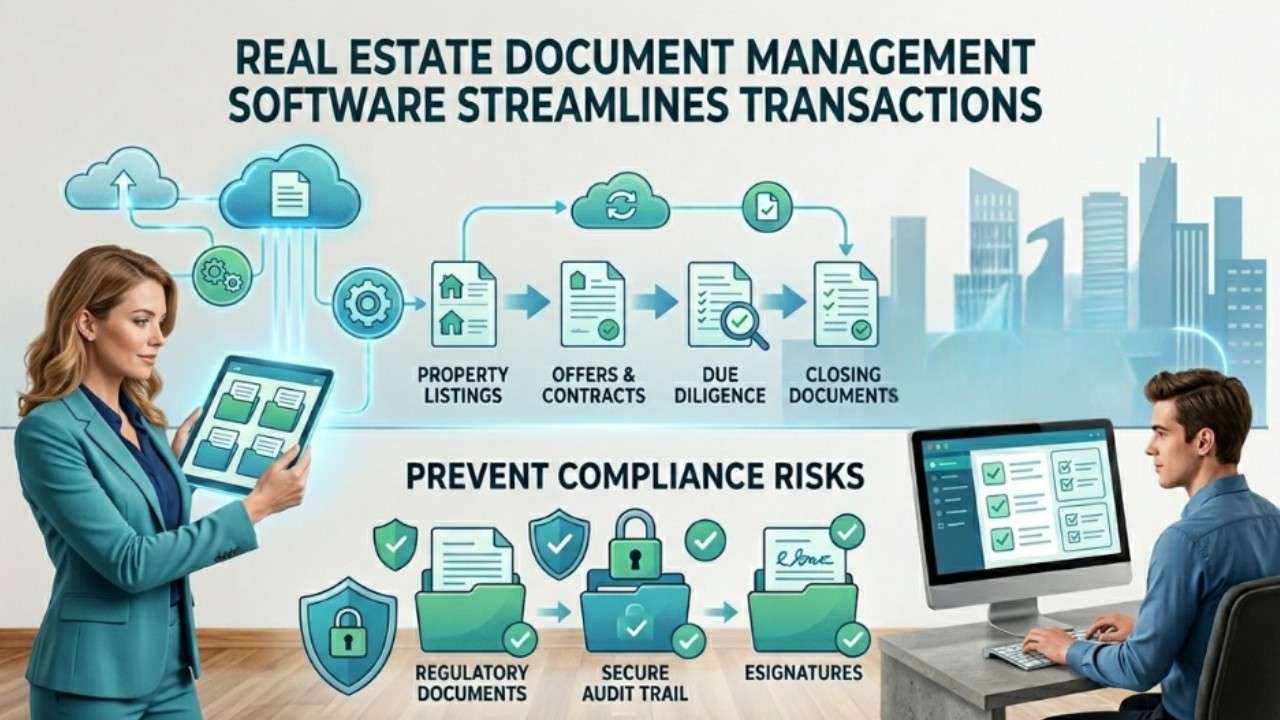
Real estate document management software helps brokerages move deals from listing to close without the typical administrative friction. Without a structured system, “closing day panic” becomes inevitable.
The closing date is exactly seven days away. The buyers are locked in, the sellers have packed their moving trucks, and the title company is preparing the final paperwork. Then the message arrives from your broker:
“We are missing the signed lead-based paint disclosure and the structural engineering addendum from the inspection period. We cannot close without an audit-ready file.”
Suddenly, what seemed like a smooth transaction becomes operational chaos. The transaction coordinator (TC) scrambles through frantic email threads, agents search through WhatsApp logs and shared folders, and everyone begins asking the same question: “Where is the latest version?”
This is the hidden friction of modern real estate. Documents themselves are rarely the problem; the problem is unstructured transaction workflows.
When real estate teams treat file organization as an afterthought rather than a core component of their operational intelligence, deals stall, commissions are delayed, and legal liabilities skyrocket. Implementing a dedicated platform is no longer a tech convenience—it is an absolute necessity to safeguard your business.
This guide breaks down exactly how real estate document management software helps real estate professionals reduce operational chaos, improve transaction visibility, prevent compliance issues, and create smoother closing experiences.
What You Will Learn
- Why traditional file storage systems create delays and document confusion in real estate transactions
- How real estate document management software improves transaction visibility and workflow coordination
- The key features that help brokerages track documents, deadlines, and compliance requirements more efficiently
- How centralized transaction workflows reduce administrative friction and closing-day chaos
- How platforms like Trackxi help real estate teams stay organized, collaborative, and audit-ready
Why Traditional File Storage Fails in Real Estate Document Management

Let’s be honest: a lot of real estate agents are still running million-dollar deals out of a chaotic mix of Google Drive, messy email chains, random spreadsheets, and text messages.
Standard cloud storage is fine for saving files, but it does absolutely nothing to manage the day-to-day chaos of a closing. The real headache isn’t finding a place to store a contract; it’s the constant guessing game of who signed what, which version is current, and whether a critical deadline was missed.
A single real estate transaction involves dozens of moving parts between agents, TCs, lenders, and title companies. When information is spread across disconnected systems, “simple” storage becomes an operational liability.
1. Documents Become "Lost" in Digital Noise
Document management becomes difficult when files are scattered across emails, folders, and disconnected systems.
As transaction volume grows, file organization becomes inconsistent. Without real estate document management software, files end up buried in 50-comment email threads or saved with inconsistent names like “Final_Contract_v2_SIGNED_NEW.pdf.”
Agents and transaction coordinators often waste hours every week:
- Searching through thousands of nested folders to find one disclosure.
- Locating missing attachments buried in “Cc” email chains.
- Verifying if the version the lender has matches the version in the brokerage file.
- Manually checking if every required initial is present on a 15-page PDF.
Often, various parties save the document to various locations under various naming conventions, thus increasing the complexity in discerning the correct or newest file.
What starts as simple file storage gradually turns into operational confusion.
2. The "Visibility Gap" Creates Transaction Bottlenecks
The visibility gap occurs when teams cannot clearly track transaction progress, document status, or pending tasks in one centralized system.
Traditional storage systems like Google Drive or Dropbox are “blind.” They can’t tell you the status of a deal. Without a centralized transaction dashboard, teams struggle to identify:
- Which mandatory disclosures are still pending.
- Whether the earnest money receipt has been uploaded.
- Who is responsible for the next step?
- How many days are left before a contingency deadline expires.
This lack of visibility creates a “bottleneck” where the TC becomes a human router of information, manually updating spreadsheets just to keep everyone on the same page.
3. Increased Compliance Risks and Administrative Friction
Compliance risks increase when brokerages lack a reliable system to track required documents, approvals, and transaction deadlines.
Compliance management is the biggest casualty of manual storage. A missing buyer agreement or an unsigned lead-based paint disclosure can go unnoticed until the week of closing.
Because traditional file storage doesn’t actively monitor transaction milestones, the burden of compliance falls entirely on human memory. This increases the likelihood of:
- Failed Audits: No clear, time-stamped trail of document approvals.
- Delayed Commissions: Deals getting held up at the last minute due to “incomplete files.”
- Legal Exposure: Missing statutory disclosures that could allow a party to rescind a contract.
Real Estate Transactions Need a "Connected Workspace"
Modern real estate operations require more than a digital folder system; they require a workflow engine. This means combining document organization, task tracking, and timeline management into one single source of truth.
This is where specialized real estate transaction management platforms like Trackxi bridge the gap. Instead of just “storing” a file, the software links the file to a live milestone, ensuring that compliance is a byproduct of the workflow, not a separate, stressful chore.
What Is Real Estate Document Management Software?

Real estate document management software is a professional digital platform developed to store, organize, and track all documents related to real estate transactions. Distinct from general-purpose cloud storage, this software is purpose-built to support the complex full lifecycle of real estate transactions, enabling the circulation of a wide range of documents, including contracts and disclosure filings across multiple types of stakeholders.
These systems create a structured transaction environment where documents, tasks, timelines, and communication are organized within one centralized workspace.
More than just file repositories, contemporary real estate document management software can serve as the back-end operations of a deal, linking documents to transaction work-flows rather than merely storing them.
By creating a single source of truth, real estate teams can reduce document confusion, improve collaboration, maintain audit-ready records, monitor compliance-related tasks, and keep transactions moving efficiently from contract to closing.
Best Features in Real Estate Document Management Software That Streamline Transactions

Real estate transactions require constant coordination between agents, transaction coordinators, brokers, lenders, sellers, buyers, title companies, and compliance officers. As the volume of transactions increases, manually managing documents on isolated systems causes confusion, delays and operational risks.
The best real estate document management software helps teams create more structured, visible, and organized transaction workflows by connecting documents, timelines, tasks, and communication within one centralized system. Below are the most valuable features that help real estate professionals move beyond “storage” and into true transaction orchestration.
1. Transaction-Based File Organization Eliminates Document Searching
One of the biggest operational frustrations in real estate is searching for documents across thousands of nested folders, email threads, and shared drives.
Modern platforms organize files directly within their related transactions. This ensures that contracts, disclosures, and addendums remain attached to the correct deal throughout the lifecycle.
The Outcome: This structure allows teams to access the latest files instantly. By centralizing documents into one organized workspace, brokerage owners reduce misplaced files and keep deals moving forward without the administrative friction.
2. Real-Time Transaction Visibility via Visual Timelines
Transaction delays often occur because teams lack visibility into pending tasks and upcoming milestones. High-performing teams are moving away from “list-based” tracking to visual transaction timelines.
What you can identify at a glance: Pending documents, incomplete signatures, upcoming contingency deadlines, and missing compliance requirements.
The Outcome: Instead of relying on manual status updates, teams gain a clearer operational view. This visibility helps reduce bottlenecks and prevents small issues from turning into “Closing Day Panic.”
3. Buyer Agreement Tracking Reduces Compliance Risks
Managing buyer agreements manually is difficult when multiple transactions are active. Without a dedicated dashboard, it is easy for an agreement to expire unnoticed.
Modern platforms track missing agreements and upcoming expiration dates automatically.
The Outcome: Automated alerts help teams identify issues earlier in the process. This reduces compliance exposure while helping brokerages maintain more organized and audit-ready transaction records.
4. Automated Task and Milestone Tracking Keeps Deals Moving
The nature of the Real Estate business involves tightly scheduled events: inspections, financial deadlines, and removing contingencies. Keeping track of these by hand on a spreadsheet can lead to human error.
Milestone-driven platforms automate task tracking and reminder workflows.
The Outcome: By reducing manual follow-ups, transaction coordinators (TCs) can spend less time “nagging” for updates and more time managing a higher volume of active deals efficiently.
5. Secure Transaction Sharing and Multi-Party Portals
Collaboration often breaks down in “Cc” email chains. The best software allows for secure, role-based sharing of the transaction workspace.
Stakeholders like Lenders, Agents, Clients can be granted access to view transaction progress or access specific files.
The Outcome: This creates a transparent “Glass Box” workflow. Stakeholders stay updated in real-time via real estate client and transaction partner portals, which minimizes the back-and-forth communication that typically clogs an agent’s inbox.
6. Centralized Document Collection and "Audit-Ready" Records
Collecting files from multiple parties through different channels (WhatsApp, Email, Text) leads to version control chaos.
A centralized collection hub ensures all documents are funneled into one structured system.
The Outcome: This reduces the risk of lost attachments and duplicate uploads. When a state auditor visits, you don’t have to “gather” records; they are already organized, time-stamped, and ready for review.
7. Role-Based Access and Operational Control
As brokerages grow, security becomes paramount. Not every user needs to see every internal note or sensitive financial document.
Role-based access controls allow administrators to manage who can view, edit, or upload documents.
The Outcome: This improves security and maintains operational consistency, ensuring that sensitive transaction data is protected while still being accessible to those who need it.
8. Integration with Compliance Platforms
Efficiency dies when you have to enter the same data into two different systems.
Modern document management software acts as the “System of Action” for daily work, while integrating with “Systems of Record” like SkySlope for final compliance.
The Outcome: TCs can manage the transaction in a collaborative environment and sync the final files to the broker’s compliance platform with one click. This eliminates duplicate work and ensures the brokerage’s records are always 100% complete.
How Trackxi Helps Real Estate Professionals Stay Organized, Visible, and Audit-Ready

As real estate transactions become more document-intensive and compliance-driven, brokerages need more than disconnected storage systems and manual follow-ups to manage operations efficiently.
Trackxi helps real estate professionals centralize transaction workflows by bringing documents, timelines, tasks, and collaboration into one structured operational workspace.
Agents, transaction coordinators, and brokers can all track and manage transaction activities with a much clearer perspective and a clear sense of accountability during the closing process rather than digging through multiple folders, emails and spreadsheets
Trackxi helps to:
- Organize files directly within transactions
- Monitor transaction progress in real time
- Track pending documents and deadlines
- Manage buyer agreement visibility
- Securely collaborate with brokerages and team members
- Maintain more organized and audit-ready records
- Provide role-based access to transaction updates and collected files
- Reduce manual coordination and repetitive follow-ups
For growing real estate agents, teams, transaction coordinators and brokerages managing a high volume of transactions, this level of coordination is the difference between reactive firefighting and scalable operational excellence.
What Real Estate Professionals Say About Trackxi
Paul
Brokerage President/CEO
“Our transaction support team utilizes this product every day to track all of our transactions. The visual workflow, variety of features and layouts make this product something I’ve never seen before. I highly recommend this to anyone who needs task or transaction management.”
Carol G
Real Estate Agent
“The system takes you from using written checklists, to a visual workflow of your transactions from start to finish. It streamlines what can be a complicated maze of activities and organizes it into easy to follow lists that can be shared with anyone that is a party to the transaction.“
Take Control of Your Real Estate Documents and Workflows
As real estate transactions become more document-heavy and deadline-driven, real estate professionals need more than simple file storage to keep deals moving efficiently. Real estate document management software helps teams connect documents directly to transaction timelines, improving visibility, reducing workflow confusion, and streamlining transaction coordinator workflows.
Don’t let a missing disclosure delay your next closing. Experience the power of milestone-driven document management with Trackxi.
Start your Trackxi free trial today!
Frequently Asked Questions About Real Estate Document Management Software
Real estate document management software is a centralized platform that helps brokerages, agents, and transaction coordinators organize, track, and manage transaction-related documents throughout the closing process. It helps streamline workflows, improve visibility into transaction progress, reduce document confusion, and maintain audit-ready records.
By increasing visibility into areas like missing or expired buyer agreements, disclosures, signed documents, and deadlines, real estate document management software reduces compliance worries. Centralized automated workflows keep track of deadlines and ensure an organized transaction record that's always ready for audits.
Cloud storage is intended for storing files and does not address workflow. Real estate transactions have deadlines, compliance needs, document tracking, teamwork and milestone workflows. Real estate document management systems integrate documents into a transaction timeline that helps teams work through the workflow process in real estate from the contract signing to the close.
Real estate document management software should include transaction-based file organization, real-time visibility into deal progress, automated task and milestone tracking, compliance monitoring, and secure collaboration tools. These features ensure that documents, deadlines, and responsibilities stay connected within a single workflow.
Unlike Google Drive, which only stores files, Trackxi is built specifically for real estate transactions. It acts as a single source of truth for each transaction, keeping all documents, tasks, timelines, and updates connected within one structured workflow. This ensures every file is always linked to the correct deal, giving teams real-time visibility into progress, compliance status, and pending actions.
